
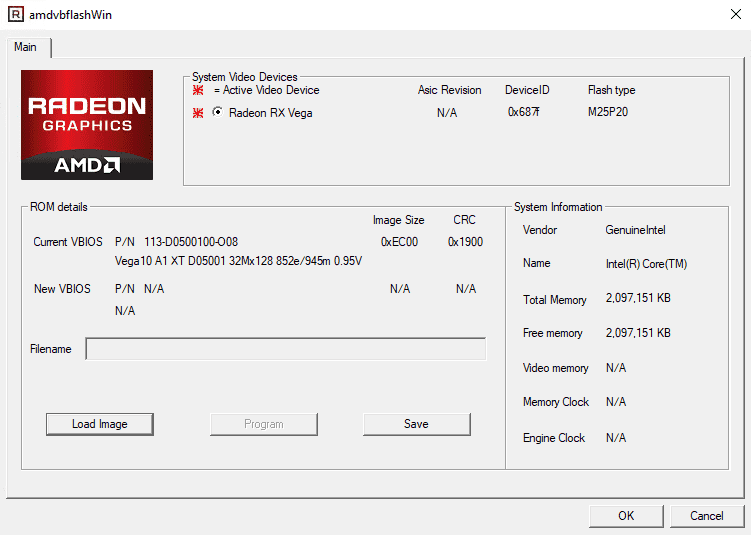
What is AMDVBFlash / ATIFlash?
AMDVBFlash / ATIFlash is a software utility designed to help users update, flash, and manage the BIOS (Basic Input/Output System) of their AMD graphics cards. The BIOS is a critical component of a computer’s hardware, responsible for controlling the interaction between the operating system and the hardware components. AMDVBFlash / ATIFlash provides a convenient and user-friendly way to update the BIOS, ensuring that the graphics card is running with the latest features, performance enhancements, and bug fixes.
Main Features
AMDVBFlash / ATIFlash offers several key features that make it an essential tool for AMD graphics card owners. These features include:
- BIOS updates: AMDVBFlash / ATIFlash allows users to update their graphics card’s BIOS to the latest version, which can improve performance, fix bugs, and add new features.
- Flash management: The software provides a secure and reliable way to flash the BIOS, minimizing the risk of bricking the graphics card.
- Snapshot routines: AMDVBFlash / ATIFlash allows users to create snapshots of their BIOS settings, making it easy to revert to a previous configuration if needed.
- Rollback steps: The software provides a clear and straightforward process for rolling back to a previous BIOS version, ensuring that users can easily recover in case of an issue.
- Secure repositories: AMDVBFlash / ATIFlash stores BIOS files in a secure repository, protecting them from corruption or tampering.
Installation Guide
Step 1: Download AMDVBFlash / ATIFlash
To get started with AMDVBFlash / ATIFlash, users need to download the software from the official AMD website. The download process is straightforward, and users can choose from a variety of languages and operating systems.
Step 2: Extract the Files
Once the download is complete, users need to extract the files to a designated folder. This folder will contain the executable file, documentation, and other supporting files.
Step 3: Run the Software
With the files extracted, users can run the AMDVBFlash / ATIFlash software by double-clicking the executable file. The software will launch, and users can begin the BIOS update process.
Technical Specifications
System Requirements
AMDVBFlash / ATIFlash is compatible with a wide range of operating systems, including Windows 10, Windows 8, and Windows 7. The software requires a minimum of 2 GB of RAM and 100 MB of free disk space.
Supported Graphics Cards
AMDVBFlash / ATIFlash supports a wide range of AMD graphics cards, including the Radeon RX series, Radeon R9 series, and Radeon R7 series.
Pros and Cons
Pros
AMDVBFlash / ATIFlash offers several advantages, including:
- Easy to use: The software has a user-friendly interface that makes it easy to update the BIOS and manage the graphics card.
- Secure: AMDVBFlash / ATIFlash provides a secure way to update the BIOS, minimizing the risk of bricking the graphics card.
- Feature-rich: The software offers a range of features, including snapshot routines, rollback steps, and secure repositories.
Cons
While AMDVBFlash / ATIFlash is a powerful tool, it has some limitations, including:
- Compatibility issues: The software may not be compatible with all AMD graphics cards or operating systems.
- Complexity: The BIOS update process can be complex, and users may need to consult the documentation or seek support if they encounter issues.
FAQ
Q: What is the difference between AMDVBFlash and ATIFlash?
A: AMDVBFlash and ATIFlash are two different versions of the same software. AMDVBFlash is designed for AMD graphics cards, while ATIFlash is designed for ATI graphics cards.
Q: How do I update my BIOS using AMDVBFlash / ATIFlash?
A: To update your BIOS using AMDVBFlash / ATIFlash, simply download the software, extract the files, and run the executable file. Follow the on-screen instructions to complete the update process.
Q: What happens if I encounter an issue during the BIOS update process?
A: If you encounter an issue during the BIOS update process, you can try rolling back to a previous version using the rollback steps provided by the software. If the issue persists, you may need to seek support from AMD or a qualified technician.