
Home » BIOS

There’s a good chance you’ve seen a motherboard that’s still solid but stuck with outdated firmware — old microcodes, broken NVMe support, or missing CPU compatibility.
That’s exactly the kind of problem UEFI BIOS Updater (UBU) was made to solve.
It’s not an official manufacturer tool — rather, it’s a community-built script package that lets advanced users update key components inside a UEFI BIOS image.
With UBU, you can replace CPU microcodes, update OROM modules (like Intel RST or LAN firmware), or inject newer EFI drivers — all without touching the main structure of the BIOS.
It’s meant for people who know what they’re doing — modders, techs, or enthusiasts who want to keep older boards running current hardware or modern storage options.

If you’re into GPU modding, you’ve probably heard whispers about Red BIOS Editor (RBE).
It’s one of those tools that doesn’t make the headlines but quietly powers half the custom Radeon BIOS mods on the internet.
Red BIOS Editor, developed by the team at Igor’sLAB, is designed for AMD graphics cards — mainly from the RX 5000 and 6000 series — and it gives you full control over the firmware settings that AMD locks down by default.
Unlike simple overclocking utilities, RBE lets you directly modify the BIOS image: voltage tables, clock states, power limits, and fan behavior. Then you flash it back using something like ATIFlash or amdvbflash.
It’s not for casual tweaking — it’s for enthusiasts who actually understand what each slider means and want fine-grained control over their GPU’s firmware.
If you’ve ever looked at your AMD Radeon card and thought, “I wish I could push this thing just a bit further,” then MorePowerTool is what you’ve been missing.
Created by Igor Wallossek and his team (yes, the folks behind Igor’sLAB), it’s a Windows utility that lets you access and modify the hidden power and voltage tables inside AMD GPU BIOS files.
It doesn’t replace your BIOS, and it doesn’t flash anything by itself — instead, it edits configuration tables stored in the Windows registry or a BIOS file, depending on how deep you want to go.
The result: control over power limits, clock ceilings, voltages, fan curves, and a lot of the stuff AMD’s official WattMan keeps locked away.
Intel Flash Programming Tool — better known as Intel FPT — is a command-line utility used to read, write, and modify firmware stored in the SPI flash chip of Intel-based systems. It’s part of the Intel ME System Tools package and is typically used by repair technicians, firmware engineers, and advanced modders who need direct, low-level access to BIOS and ME regions.
There’s no fancy interface here. You work entirely from the terminal, and every command matters. Used properly, FPT can back up or restore a system’s BIOS image, unlock hidden regions, and even recover a board after a failed update. Used carelessly, it can brick the system completely.
If you’ve ever wanted to peek inside your memory settings without rebooting into BIOS, ASRock Timing Configurator is one of the easiest ways to do it.
Originally built for ASRock motherboards, it’s a small Windows utility that reads your system’s live memory configuration and shows every timing parameter in plain view — no stress, no tweaking, just information.
Despite the name, it’s not limited to ASRock boards anymore. On most modern Intel platforms, it’ll work just fine across other brands too — MSI, ASUS, Gigabyte — as long as the board exposes standard SMBus and memory registers.
It’s a tiny tool, no installation, no clutter — just double-click and you’ll instantly see every primary, secondary, and tertiary timing your RAM is currently running.

If you’ve ever wondered what else sits inside your computer’s BIOS that you can’t change from the setup screen, that’s exactly where AMIBCP comes in.
It’s short for AMI BIOS Configuration Program, made by American Megatrends, the same folks behind a ton of PC firmware.
There are a few versions floating around, but the ones most people still use are 4.53 (for older Aptio IV BIOS) and 5.02 (for Aptio V).
They look almost identical, just tuned for different generations. Basically, the tool opens up the BIOS image so you can peek inside every setting — including the ones motherboard makers normally hide from users.

If you’ve ever wanted to replace that default motherboard logo that flashes when your PC starts, AMI Change Logo is the little utility that makes it possible.
Developed by American Megatrends, it’s a lightweight Windows tool designed to extract and replace the boot logo image inside AMI BIOS or UEFI firmware files.
It doesn’t need coding skills or deep BIOS editing — you just load the BIOS file, pick a new image, and the tool handles the rest.
For modders, small PC brands, or anyone who wants a custom splash screen, it’s one of the easiest ways to personalize a system at firmware level.

If you’ve ever had to recover a dead Radeon card or wanted to flash a custom BIOS, chances are you’ve met AMDVBFlash — or its older name, ATIFlash.
It’s been around forever and, despite the dozens of flashy utilities out there, this one still does the heavy lifting for AMD GPUs.
Think of it as the “firmware flasher” for your graphics card. You feed it a BIOS file, point it to your card, and let it handle the rewrite.
There’s a simple Windows version with a clean interface, and a command-line version for people who prefer exact control — the kind of tool that never pretends to be user-friendly but always works if you respect it.
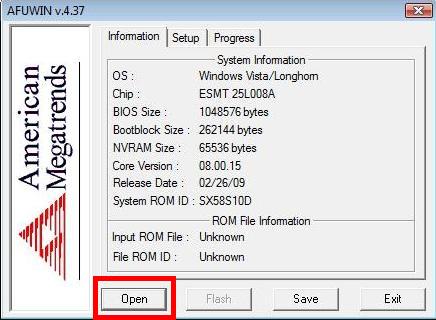
AFUWIN — short for AMI Firmware Update for Windows — is the Windows-based version of AMI’s long-standing BIOS flashing utility.
It’s the younger, more convenient sibling of AFUDOS, built to work directly from within Windows without having to boot into DOS or use command-line tools.
The main reason people still use AFUWIN is simple: it’s fast, easy, and often the only practical option when working on modern boards where DOS flashing isn’t supported anymore.
You just run the tool, load your BIOS image, check a few boxes, and hit “Flash.”
That said, it’s also riskier — flashing inside a live operating system means anything from a crash to a power flicker can ruin your day.

If you’ve been around PCs long enough, you’ve probably heard of AFUDOS — short for AMI Firmware Update for DOS.
It’s one of those utilities that never really went away. Despite all the new Windows-based flash tools, AFUDOS still pops up whenever someone needs to update or repair BIOS on an older motherboard.
The concept is simple: boot into DOS, run the tool, point it at your BIOS file, and it programs the chip directly. There’s no interface, no prompts, no safety net — just pure command-line control. And that’s exactly why a lot of technicians still keep it on a USB stick.